
Polish Drinks — top 6 drinks from Poland
Here comes a list of modern and traditional Polish drinks. Under their descriptions you can find some authentic recipes. Going to visit Poland? Would you like to taste some delicious foods not choosing on spec? You are welcome. All Polish foods listed below constitute a typical Polish menu even nowadays. Therefore, while visiting Poland, one will certainly come across many of them. I wish you good luck in exploring Polish tastes and… Smacznego!
Kompot • Compote
in Polish: as above
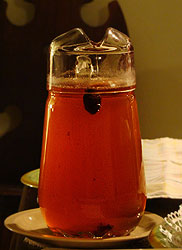
Compotes are drinks prepared of fruits – usually fresh, sometimes dried. Sugar is added and sometimes cloves are used as a spice. In Poland the most popular fruits are: apples, morello cherries, currants, cherries, strawberries, pears and a rhubarb. Compote is prepared in the summer and stored for the fall and the winter time. It's served cold, together with the fruits. A glass of compote is typical dinner drink in many Polish homes.
The so-called 'susz', prepared of the blend of dried fruits is a special kind of compote. Susz, in contrast with raw fruit compotes, has a brown color, muddy look and a very peculiar taste. Susz is one of compulsory ingredients of the Christmas Eve supper table.
Oranzada • Orangeade
in Polish: oranżada
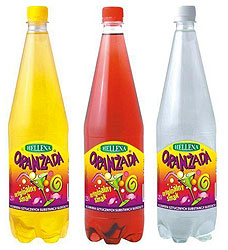
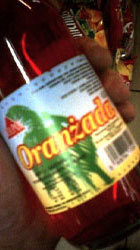
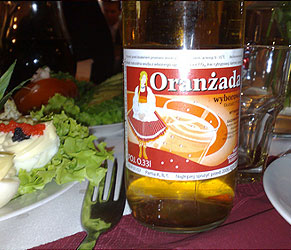
Orangeade is – as you probably know – a sweet, alcohol-free, carbonated drink with an orange taste (traditionally). This drink, which travelled to Poland straight from France, spread in the aristocratic Polish cuisine in the 18th century. Basic ingredients of oranzada are sugar and orange juice or syrup.
Oranzada had its period of magnificence during the Cold War. In communist Poland, poorly and insufficiently equipped with goods of any kind, the orangeade constituted one of the basic, bottled drinks available in groceries. There was a technology of producing oranzada of powdered orange juice(!). This products was sold as powder, which dissolved in a glass of water gives you, a faint reminder of a glass of oranzada-type beverage. Another type of oranzada was sold in plastic bags which thirsty one should pierce with a straw. Today the popularity of this drink is definitely smaller, compared with Coca-Cola and other 'international' drinks.
Wodka • Vodka
in Polish: wódka
Wódka, in English vodka, is a very well known pure alcohol, having its origins in Poland, Russia and Ukraine. Vodka usually has about 40% of alcohol and it is a product of distillation, thinned with water in a 2:3 ratio. Vodka is produced of grains, potatoes or more rarely of sugar beets. Vodka belongs to the most important 'national' alcohols not only in Poland and Russia. Other countries of Central and Northern Europe deal with the production of vodka, being often quoted as the so-called 'Vodka belt countries'. These are the following countries of the European Union: Poland, Finland, Lithuania, Latvia, Estonia and Sweden.
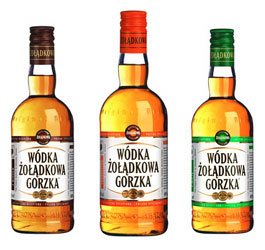
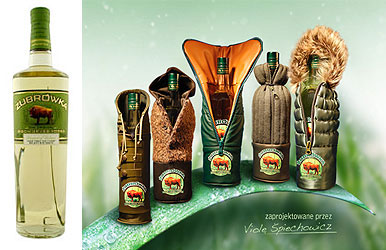
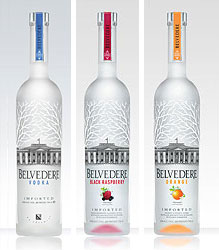
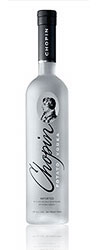
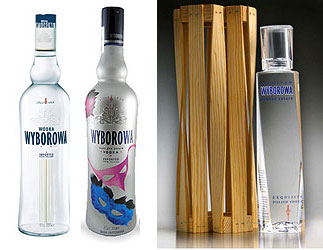
The most well-known brands of Polish vodka are: Balsam Pomorski (38%, colorless vodka ), Belvedere, Chopin (pure luxury vodka luxury, fourfold distilled, repeatedly awarded, manufactured from the specially selected variety of Stobrawa potatoes traditionally planted in surroundings of Siedlce, Poland), Danziger Goldwasser, Extra Zytnia, Luksusowa, Maximus, Pan Tadeusz (rye vodka, 40%, on the bottle there is an illustration from the first edition of Pan Tadeusz poem by Adam Mickiewicz, year 1834), Sobieski, Starka (traditional dry rye vodka, maturing in oaken barrels from 10 up to 50 years), Wyborowa, Zoladkowa Gorzka, Zubrowka = Bison Grass Vodka in English (every original bottle of Bison Vodka contains one stalk of the grass Hierochloe odorata). A well-known Dutch vodka BOLS is also produced in Poland (since 1994).
Piwo • Beer
in Polish: as above
Beer is an oldest and most frequently drunk alcoholic beverage in the world. In Poland, as well, beer rejoices a huge popularity, though not equaling Czechs, Germans and Irishmen who are still leaders in this field :) Brewing traditions on Polish land come from the very, very old times of early Slavic people and beginnings of the Polish statehood. The oldest document recalling beer in Poland is 'The Polish Chronicle' by Thetmar from Merseburg. In this chronicle Polish King Boleslaw I the Brave (reign: 992-1025!) was dubbed 'the beer drinker'.
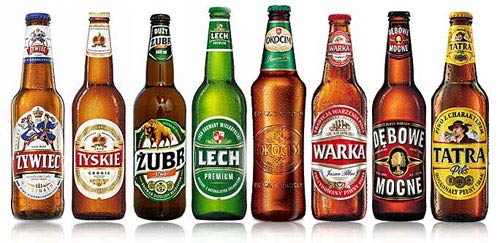
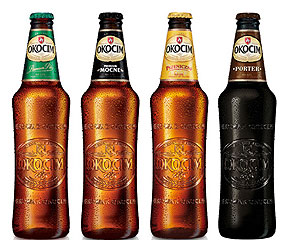
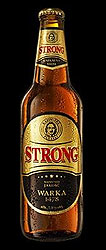
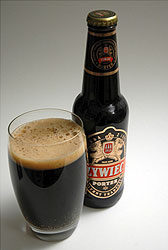
The most popular Polish brands of beer are (in Poland): Zywiec, Tyskie, Zubr, Lech, Okocim, Warka, Debowe Mocne, Tatra. Obviously many companies produce their beers in a few equally popular varieties, e.g. Zywiec and Zywiec Porter, Warka Strong, or for types of Okocim. In Poland there is a large number of small breweries, with little market penetration but producing delicious beers – definitely worth trying.
Nalewki • Liqueurs
in Polish: nalewka (singular), nalewki (plural)
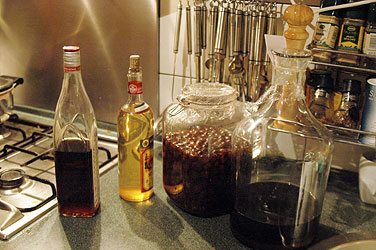
Polish liqueurs - 'nalewka', are alcoholic extracts from fruits, spices, flowers or herbs. Nalewki usually contain 40-45 per cent of alcohol, just like vodka. However, according to many people they taste much better and are equally popular among men and women alike. more
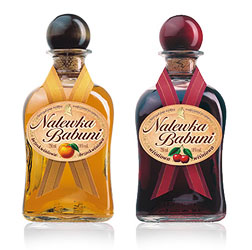
Nalewka Babuni (Grandma's Nalewka).
"Contrary to ordinary liqueurs, nalewkas are usually aged. Most of the nalewkas have their proper names derived either from the main ingredient or the name of the traditional place of manufacture. The recipes for nalewkas were at times kept in secret by some of the szlachta families and were only given away to the senior children upon the death of the father. Among the common main ingredients are haw, lily-of-the-valley, Cornus alba, black currant, juniper, ginger, green Persian walnut, cherries, wormwood, anise, apricots and many more." — Wikipedia
Miod pitny • Mead
in Polish: miód pitny (singular), miody pitne (plural)
Mead is one of traditional Polish alcohols. In Polish it is known as miod pitny, what means 'drinkable honey'. It is produced by fermentation of honey. Meads are sometimes made with various juices to improve their taste, as well as with herbs and spices. Mead made from pure lime honey was particularly valued in past. Its popularity is not as high as that of vodka or beer, but the taste is really great. You can find and buy different kinds of Polish meads, known as 'poltorak', 'dwojniak', 'trojniak' or 'czworniak', differing in taste, alcohol and honey concentration. more
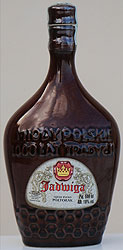
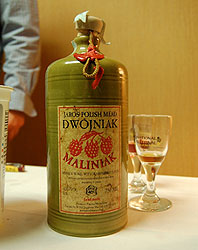
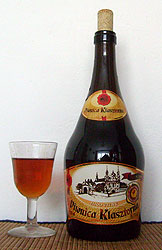
"Mead was also popular in Central Europe and in the Baltic states. In the Polish language mead is called miód pitny, meaning 'drinkable honey'. In Russia mead remained popular as medovukha and sbiten long after its decline in the West. (…) In Finland a sweet mead called Sima (cognate with zymurgy) is still an essential seasonal brew connected with the Finnish Vappu (May Day) festival. It is usually spiced by adding both the pulp and rind of a lemon." — Wikipedia