Polish Appetizers and Ingredients — top 23 appetizers from Poland
Here comes a list of modern and traditional Polish appetizers, as well as their typical ingredients. Under their descriptions you can find some authentic recipes. Going to visit Poland? Would you like to taste some delicious foods not choosing on spec? You are welcome. All Polish foods listed below constitute a typical Polish menu even today. Therefore, while visiting Poland, one will certainly come across many of them. I wish you good luck in exploring Polish tastes and… Smacznego!
Polska kielbasa i wedliny • Polish sausages and charcuterie
in Polish: kiełbasa, wędliny
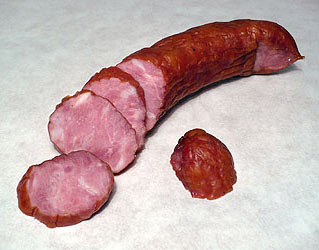
Kielbasa is very well-known product from Central and Easter Europe. In general kielbasa is made from pork and some special spices. Many kinds of sausages exist – both in terms of composition, appearance, as well as way of processing. E.g. smoked and dried sausages are very popular in Poland and considered exclusive. The easy way to recognize good quality sausage is by the amount of meat used for the production (usually producers are supposed to inform you about this on the package).
Poles also love their coldcut, which is offered in a great variety in Polish butcher's ('sklep miesny' which means 'meat shop'). Coldcuts are an everyday staple as far as appetizers go. It is eaten with bread, as sandwiches, when one wants to eat something fast, easy and ordinary.
Kaszanka aka Kiszka • Polish black pudding
in Polish: as above
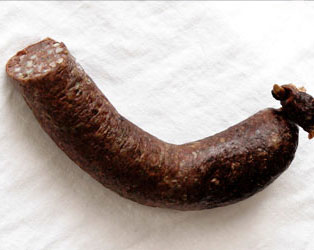
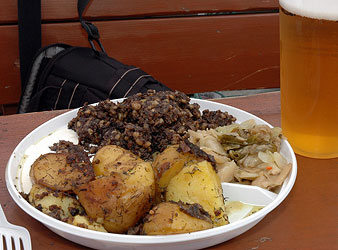
Kaszanka is a Polish black pudding made of groats, blood and giblets: liver, lungs, pork crusts, fat. Basic spices are: onion, pepper and marjoram. Buckwheat groats or barley are used to make kaszanka. Polish black pudding is eaten both cold and hot (after stir-frying on the frying pan).
Ogorki kiszone • Polish-style pickled cucumber
in Polish: ogórki kiszone
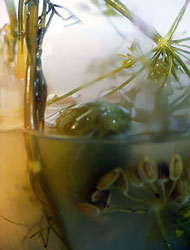
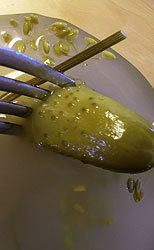
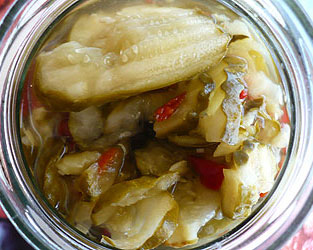
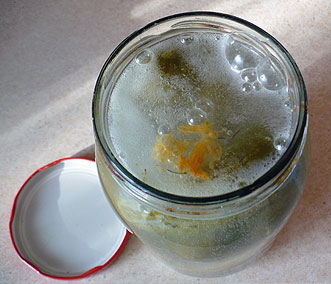
Ogorki kiszone – Polish dill pickle – it is one of the great things in Polish cuisine (in my humble opinion). The name 'ogorki kiszone' is usually translated into English as 'dill pickles', but you can also call them 'sour cucumbers', since a strong, sour taste is characteristic of them. It is sad, but you can't buy real, high quality Polish dill pickles in groceries, neither in US or UK, and not even in Poland. The majority of sour cucumbers available in shops is simply not tasty and in order to experience the real taste, one should go to Poland and try homemade dill pickles. And such homemade dill pickles are made from soil-grown cucumbers which are put into jars. Beds of dill, roots of horseradish and some cloves of garlic are then added. Other spices sometimes used are: bay leaves, grains of mustard and pepper, as well as cherry leaves, currant, grapes or oak. We pour water over the integrity, salt and shelf the jars for a few weeks.
Poles use dill pickles as an appetizers with many dishes. Polish dill pickles constitute a basic ingredient of cucumber soup and may be used as the addition to potatoes, sandwiches or as an ingredient of salads. Sometimes they are used as an appetizer for vodka and herring served in oil and onion.
Sledzie • Herring
in Polish: śledzie
In Poland, just like in all countries of the Baltic Sea and the North Sea basins, people have a cult for herring. This little sea fish is being prepared as a cold appetizer. From delicious herrings in vinegary marinades, herring in oil and onion,and on to sweet herrings – the amount of varieties and tastes is really large; all they have their names and enjoy great popularity on Polish tables.
Kalafior / bob / fasolka szparagowa • Boiled cauliflower / string & broad bean
in Polish: kalafior / bób / fasolka szparagowa
Many Poles love cooked cauliflower ('kalafior'), string bean ('fasolka szparagowa') and broad bean ('bob'). During the summer all of these are quite common in Polish homes. Broccoli is not so typical for Polish cuisine, but is constantly gaining popularity. Usually Poles eat string bean or cauliflower alone – poured only with the roux made of breadcrumbs. However, sometimes it is used as a side dish for meat dishes.
Twarog, oscypek i bryndza • Curd cheese, oscypek and bryndza
in Polish: twaróg, rest as above
Curd cheese ('twarog' in original) enjoys a great popularity in Poland and is commonly called 'white cheese'. Poles eat curd cheese with spices, as well as sweet. It is made from cow's milk. Bryndza – the sheep's milk cheese is similar, but softer.
Oscypek are tough smoked cheeses made from sheep's milk, characteristic of Polish mountains (particularly Tatra Mountains and Podhale region). It is produced in the original form of small, spindle-like blocks with typical regional decorative patterns. Oscypek is one of tourist attractions of Polish mountains. You can eat it cold or hot (grilled and served with cranberry sauce). Fresh oscypek is particularly tasty. One can buy it early in the morning, right after its production, in shepherd's huts, which you would come across in mountain valleys. more
Twarozek
in Polish: twarożek
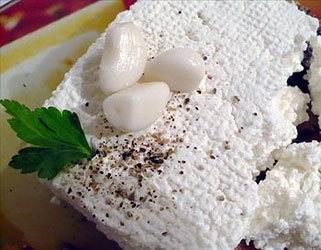
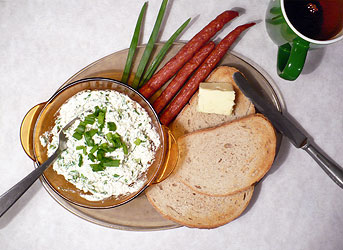
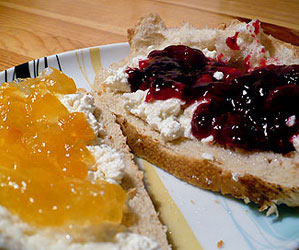
Twarozek is made of white cheese (curd cheese) mixed with chives, radish, cream and spices ('spicy twarozek') or with sugar, fruit and/or jam ('sweet twarozek'). In Poland this is a popular ingredient for breakfast sandwiches.
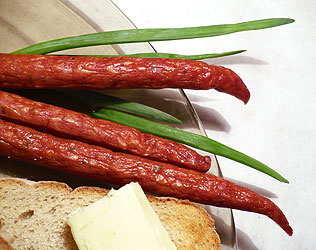
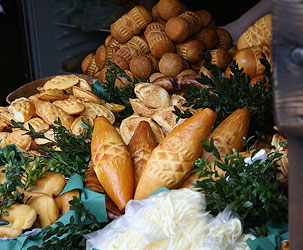
Photo on the left shows one of my favorite 'spring breakfasts' – twarozek with chives, dill, pepper and a pinch of ginger. I eat it with thin, dry, smoked, Polish sausage called 'kabanos' (it looks like pepperoni, but in my humble opinion, it tastes much better). On the right you can see sweet twarozek simply made by mixing curd cheese with a bit of milk and sugar. Served as sandwiches covered with jam. All of that is of course extremely simple to make. more
Powidla • Powidl
in Polish: powidła
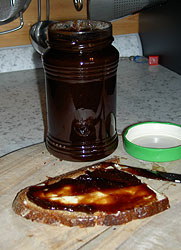
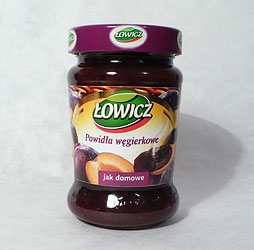
Powidla is a kind of thick jam or preserves, similar a little bit to prune butter, made of long stewed purple plums. Traditionally powidla were made by frying plums in pots for few days until brown. Powidla are known, among others, in the German, Hungarian and Slovak cuisines.
Pigwa i syrop rozany • Quince and rosehip syrup
in Polish: pigwa, syrop różany
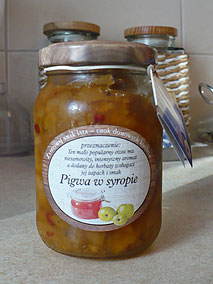
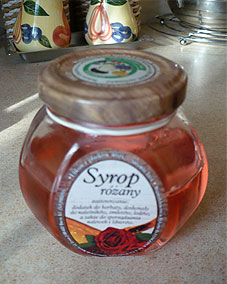
Quince or rosehip syrup are great with black tea, which is extremely popular in Poland. In fact, black tea is very important in Polish cuisine (like in England), together with coffee, kompot, fruit juices and alcoholic beverages. Never served with milk, but quite often with lemon juice, raspberry juice or other additions like quince or rosehip syrup.
Kapusta kiszona • Sauerkraut
in Polish: as above
Kapusta kiszona (sauerkraut) is a very important ingredient in Polish cuisine, as well as in that of other countries in Central and Eastern Europe. Sauerkraut is made of shredded cabbage, which after salting is subjected to fermentation, resulting in a particular sour taste. It is possible to eat the sauerkraut 'in raw'. For example it can be served as salad with some meat dishes. However, in Poland (in general) it is often used as ingredient in some dishes – like bigos, croquettes or mushroom-cabbage pierogi.
Grzyby • Wild Mushrooms
in Polish: as above
In Poland there is a strong tradition of mushroom picking, and edible mushrooms of many kinds constitute one of very important ingredients of traditional Polish cuisine. Wild mushrooms are usually used for mushroom sauces, soups and stuffing (for pierogi etc.), but also for preparing wonderful preserves known as 'marinated mushrooms'. Dried mushrooms are used later during the winter time. more
Sosy grzybowe • Mushroom sauces
in Polish: as above
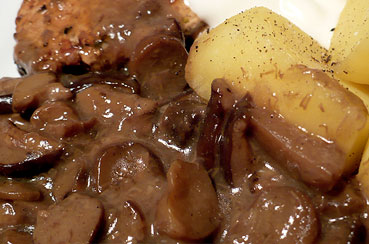
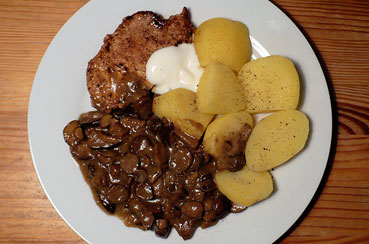
Polish mushroom sauces are brown and dense. They are characterized by a very intense, mushroom taste. Sauces are made from mushrooms of many kinds. As a result, you have sauces with different tastes and uses. A chanterelle mushroom sauce is an example of particularly a noble one, while a white mushroom sauce is an ordinary, cheap and far more common. Mushroom sauces are eaten with pastas, bread, or being used as a noble addition to meat and fish dishes.
In the fall period, when the time of mushroom picking begins, both mushroom sauces and soups are being made from fresh, wild mushrooms. Off-season, dried mushrooms are being used. Many families dry mushrooms on their own. Dried mushrooms are also available in large Polish groceries and supermarkets, but their price is very high (about 50$ per lb).
Kasza • Groats
in Polish: as above
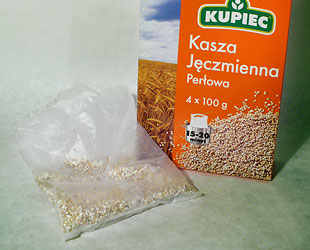
Kasza (kasha, groats) – edible seeds of cereal crops – have been the base of the Polish cuisine for a few hundred years. With time, groats were supplanted by potatoes, however they are eaten to this day in Poland, mainly on account of their healthy character and the wealth of nutrents. In Polish cuisine, buckwheat groats, millet groats, barley groats, and semolina are well-known.
Wloszczyzna • Soup vegetables
in Polish: włoszczyzna
Wloszczyzna is a traditional combination of vegetables which you can buy in every grocery, 'vegetable shop', at the market and in every stall. Wloszczyzna is used in the Polish cuisine, as the vegetable base for many soups. This universal blend is traditionally made of: carrots, parsley, celery, cabbage and leek. A very similar thing appears in the French cuisine and is called 'mirepoix'.
Buraczki • Stewed beets
in Polish: as above
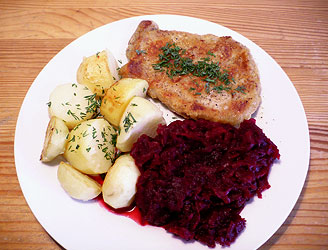
Buraczki is a delicious addition to meat dishes and it is made from grated, boiled and stewed red beets (all the way to softening). Usually buraczki are sour-sweet. They compliment beef meals, but can be served with other meats, too (like in the picture below).
Cwikla • Beetroot/horseradish cwikla
in Polish: ćwikła
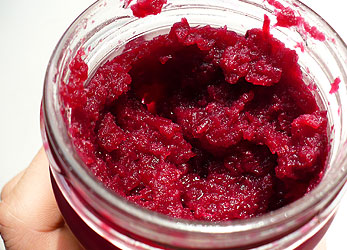
Cwikla is a very tasty Polish salad, served with meat dishes. It has an original taste. Basic ingredients are grated red beets and horseradish. Sugar, salt and lemon juice (or vinegar) are used as seasonings. Sometimes also caraway, apples, red dry wine, cloves or parsley leaves are used in recipes for cwikla.
Koper aka koperek and natka pietruszki • Dill and parsley leaves
in Polish: as above
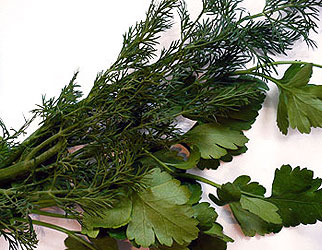
The dill and parsley leaves are a standard ingredient in the Polish cuisine, used in salads and for sprinkling boiled potatoes. In Polish they are often called 'zielenina', which means 'greens'.
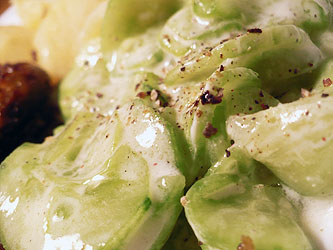
Mizeria • Misery
in Polish: as above
Mizeria is a simple salad made of the sliced fresh cucumber and cream. Dill, chives or parsley leaves are sometimes added. Mizeria salad is prepared with typical spices, such as salt and pepper, but sometimes is also served sweet (mixed with sugar). Mizeria is typically served as a side dish for fried or roasted chicken or turkey.
Salatka jarzynowa • Vegetable Salad
in Polish: sałatka jarzynowa
Traditional Polish vegetable salad, made of vegetables typical for the Polish cuisine: carrot, parsley, potato, celery, sour cucumbers, onion and pea. Additional ingredients are: hard-boiled eggs, mayonnaise, mustard, salt and pepper. The salad needs to mature – it is best to prepare one day before serving. Goes very well with sandwiches of all kinds.
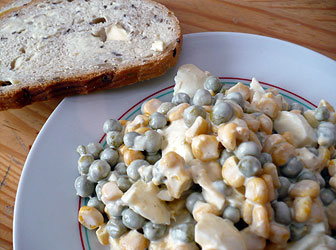
Salatka z groszku i kukurydzy • Pea and corn salad
in Polish: sałatka z groszku i kukurydzy
The ingredients of this salad are quite simple: pea and corn (from can), diced hard-boiled eggs, mayonnaise, salt and pepper. It tastes delicious with Polish charcuterie (cold cut), Polish sausage (kielbasa) and meat.
Salatka z pomidorow i cebuli • Tomato and Onion Tier Salad
in Polish: sałatka z pomidorów i cebuli
Slices of the tomato sprinkled with onion circles or dices make a simple salad oftentimes served with scrambled eggs.
Surowka z marchewki • Carrot salad
in Polish: surówka z marchewki
Salad made of grated carrot and apple with sugar and lemon juice. From time to time cream is also used.
Maslo i smalec • Butter and lard
in Polish: surówka z marchewki
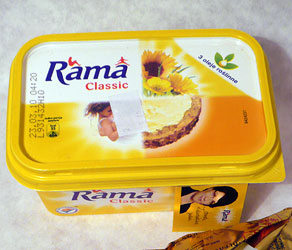
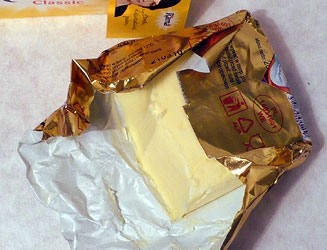
Old Polish cuisine was full of valuable home-made butter. Nowadays shop margarines enjoy greater popularity for spreading, but the position of butter, for frying or as an ingredient in some dishes is not endangered. Traditional Polish cuisine also uses lard and pork scratching, as well as vegetable oils. In past linen and poppy oils were common. Today both of them are replaced by rapeseed and sunflower oils. Since the linseed oil quickly goes rancid, it is/was only used for preparing cold sauces. When the recipe require high temperature, for instance during frying and baking, butter or rapeseed oil is used instead.
Pork scratching is used as a spicy addition to dishes. Lard, once very popular, is eaten liberally with bread. Although such a plain snack is very spicy, bread with lard is not so popular in Polish homes today because of health issues. There also is a Polish expression 'bread with lard'. It means living in poverty. When a Pole says 'you will be eating bread with a lard' it means 'you will be so poor and will not afford lavish food'.