
Polish Desserts and Sweets — top 22 desserts from Poland
Here comes a list of modern and traditional Polish desserts and sweets. Under their descriptions, you can find some authentic recipes. Going to visit Poland? Would you like to taste some delicious foods not choosing on spec? You are welcome. All Polish foods listed below constitute a typical Polish menu even today. Therefore, while visiting Poland, one will certainly come across many of them. I wish you good luck in exploring Polish tastes and… Smacznego!
Paczki • Polish donuts
in Polish: pączek (singular), pączki (plural) ♫
Paczki are one of the most typical sweet snacks you can buy in a Polish store. Paczki are a round spongy yeast cake stuffed with one of many fillings like: rose or strawberry preserves, liqueur, budyn (Polish pudding/blancmange, see below), sweet curd cheese or chocolate. This Polish dessert is fried on deep oil until it reaches a dark, golden color and is served topped with powdered sugar, icing sugar or chocolate. Also, it is oftentimes sprinkled with orange peel. Paczki are one of the most traditional Polish desserts; they appeared in Poland during the time of King Augustus III of Poland (first half of 18th century). The word paczki is plural, its singular equivalent is paczek.
In Poland, there is a strong and pleasant tradition of eating paczki on last Thursday of the carnival. This day is a so-called 'fat Thursday' ('tlusty czwartek' in Polish language). Statistically, every year the Poles consume 100 million paczki in a course of this one day only. A superstition says, that if anyone does not eat a single paczek, they will be unlucky all year long. In the past a baker who had prepared paczki, hid an almond or a nut in some of them. Poles believed that the one who finds one of these paczki, is going to be lucky all their life.
Polish 'Fat Thursday', which is the Thursday before Ash Wednesday, should not be confused with a so-called 'Fat Tuesday'. Fat Tuesday, better known as Mardi Gras is a tradition cultivated in Belgium, Netherlands, Sweden and some parts of United States and Canada. Interestingly enough, Fat Tuesday is also known in Germany, and in the same time Germany is the only country that shares the tradition of Fat Thursday with Poland :)
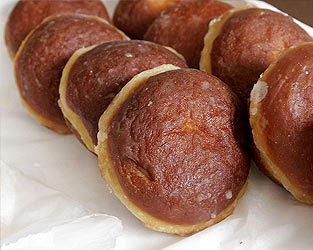
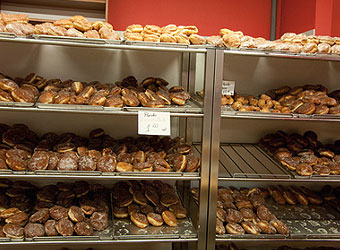
"Paczki have been known in Poland at least since the Middle Ages. Although they look like bismarcks or jelly doughnuts, paczki are made from especially rich dough containing eggs, fats, sugar and sometimes milk. They feature a variety of fruit and creme fillings and can be glazed, or covered with granulated or powdered sugar. Powidla (stewed plum jam, powidl) and wild rose hip jam are traditional fillings, but many others are used as well, including strawberry, Bavarian cream, blueberry, custard, raspberry and apple." — Wikipedia
Sernik • Cheesecake
in Polish: as above
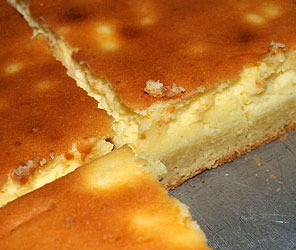
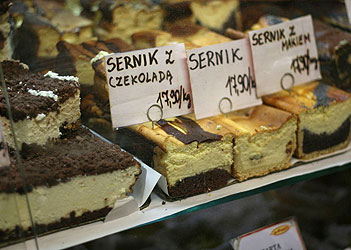
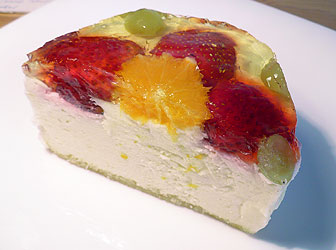
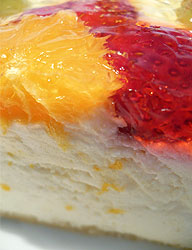
Cheesecake is one of the most popular desserts in Poland. A sweet curd cheese is its main ingredient. There are many kinds of sernik, different in composition, taste and way of preparation. The best known is a cheesecake baked in the oven and made on a layer of a crumbly cake, although there are also cheesecakes prepared without baking. In most cases raisins, fruits, a crumble topping or chocolate sauce are stock additions. Quite an original example of this Polish dessert is a delicious sernik made from a sponge cake and cream cheese, and covered with fruit and jelly. This type of cake is dished up cold.
Makowiec • Poppy-seed cake / loaf
in Polish: as above
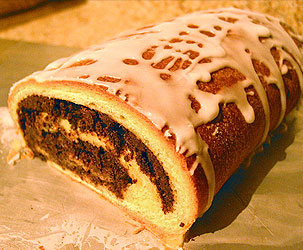
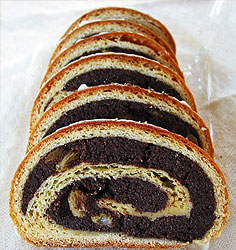
Poppy-seed cake, also known as poppy seed loaf, is a traditional Polish dessert – a yeast cake stuffed with ground poppy. Some raisins, almonds or walnuts are the most typical additions. The baked cake is decorated with icing and (usually) orange peel.
In the distant times this poppy-seed cake was a traditional dessert prepared for Easter and Christmas. In the Christian tradition poppy, containing thousand of seeds in one poppy head, is a symbol of harvest and fertility. Therefore, in the past, the Poles and other Slavs believed that eating poppy-seed cake during the holidays will bring them luck in life.
Piernik • Gingerbread
in Polish: as above
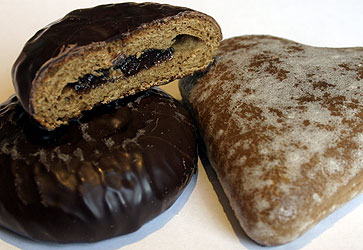
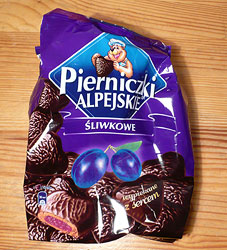
Gingerbread is a well-known aromatic cake with a very intense and characteristic taste. It is a little hard and has a dark-brown color. This Polish cake is made from wheat and rye flour, milk, eggs, caramelized sugar and honey. Cinnamon, ginger, cloves, cardamom, nutmeg, anise and lavender are usually used for adding flavor. In Poland, piernik is sold in a form of a big lump of a cake, or as a package of small cookies usually covered with chocolate and filled with fruit preserves, nut mass or marzipan.
The gingerbread was a traditional cake of Hanseatic cities. Hence it is known not only in Poland, but also in Germany, Netherlands, Russia, and in Scandinavian countries. Piernik became popular in 18th century in Poland and, just like in other countries, it initially was a symbol of prosperity and a high social status. This luxury character of the dessert was a consequence of very high price of spices. Although gingerbread is normally considered a dessert, crumbled piernik is an ingredient of a traditional Old Polish grey sauce.
Kluski z makiem • Pasta with poppy-seed
in Polish: as above
Kluski z makiem is a traditional sweet Polish dessert dish. Pasta with poppy-seed is usually eaten during Christmas. This Polish food consists of kluski (kind of home-made pasta) and poppy mass prepared from ground poppy with an addition of honey, nuts, almonds and other stuff.
Kisiel
in Polish: as above
Kisiel is a sweet, thick fruit dessert. This Polish dessert is usually served hot. However, it is also possible to eat cold kisiel. Kisiel is made with an addition of potato starch which serves as a thickening agent. Although making this Polish dessert on one's own, with use of potato starch, fruit and fruit juice, does not constitute a problem, buying powdered ready-made kisiel is definitely more popular. In Polish stores this dessert is available in many flavors.
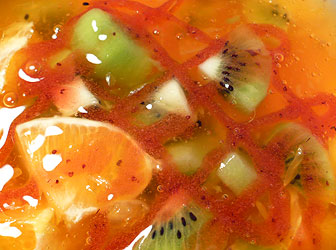
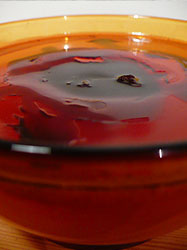
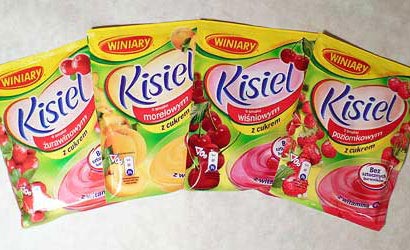
"Kissel or kisel is a popular dessert in Eastern and Northern Europe. It consists of sweetened juice, thickened with arrowroot, cornstarch or potato starch, and sometimes red wine or dried fruits are added." — Wikipedia
Budyn • Pudding
in Polish: budyń
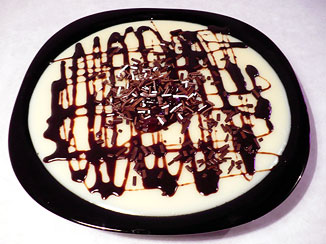
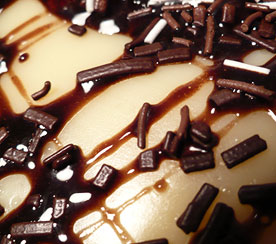
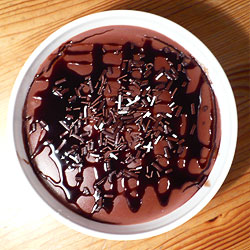
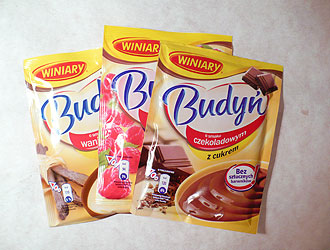
Budyn is a pudding, or blancmange. This Polish dessert is quite similar to kisiel but made of milk instead of water. Polish budyn is also very similar to English sweet puddings. Most often budyn has a vanilla or chocolate taste. This dessert is dished up hot with an addition of juice, fruit, chocolate or toffee icing, or with some nuts and raisins. Some people concoct salted blancmange made from mushrooms or vegetables.
Faworki aka chrust • Angel wings
in Polish: faworki, chrust
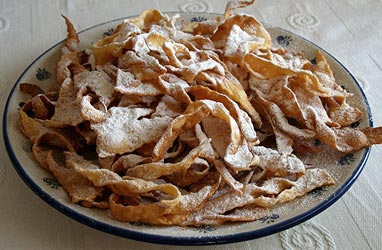
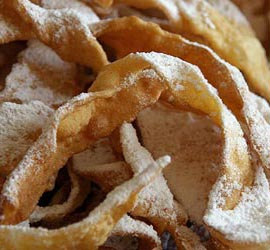
Polish dessert faworki also appears under names such as chrust or jaworki. It is a traditional Polish delicacy made from a sweet crisp cake in a shape of a bow. Oftentimes faworki are eaten on the last Thursday of the carnival (the so-called tlusty czwartek, which means fat Thursday) and before Ash Wednesday. A lot of yolk is used in the production of the dough. It must be quite well aerated, which requires intensive and long kneading and bumping. Faworki are cut out of a lump and then fried in deep oil.
Babka wielkanocna • Polish easter cake
in Polish: as above
Baba or babka wielkanocna is a simple Slavic yeast cake dished up during Easter. This dessert is well-known to many Slavs as well as Lithuanians. After baking the cake babka is iced with icing, or with rose or orange water. There are few kinds of babka wielkanocna. A special kind of this Polish cake is a so-called sekacz - a tree cake baked on a rotary spit (see below).
Sekacz • Tree cake
in Polish: sękacz
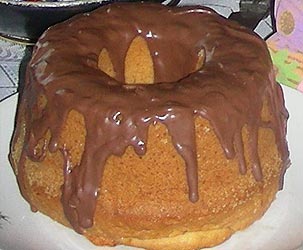
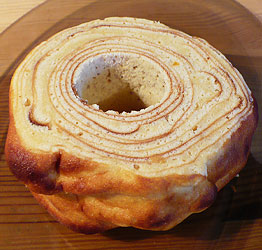
Polish sekacz – a tree cake is a sponge cake baked above a flame on a rotary spit. Originally, sekacz was a traditional Tartar cake. Later in history it has become popular on the Polish Eastern Borderlands. Today in Poland, sekacz is recognized by the Poles as a regional specialty of the Podlasie region. This delicious Polish cake can be covered with icing or chocolate, but oftentimes is eaten plain, without any addition or decoration.
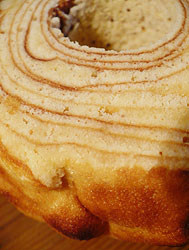
The name of this dessert comes from its distinctive appearance. As a result of pouring the spit with layers of dough, the thick layers of this bright cake are striped with some dark and thin layers of scorched cake, which are visible in a cross-section ofthis Polish tree cake. That appearance resembles the growth rings in the trunk of a tree. Polish word sekacz is derived from sek, which means knot.
In our times a tradition of baking various forms of tree cake is preserved in many European countries: Switzerland, France, Romania, Hungary, Lithuania, Sweden, Poland and in central Germany (where it is known as Baumkuchen or Prugelkrapfen). Interestingly enough, this tree cake became one of the favorite cakes in Japan.
Mazurek • Shortcrust tart baked at Easter
in Polish: as above
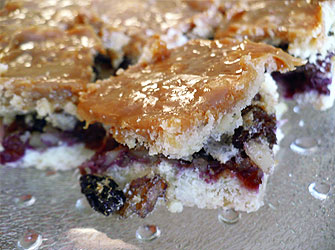
Mazurek is a simple traditional Polish cake baked for Easter. It can be generally described in English language as a shortcrust tart. The characteristic features of this Polish cake, which will allow you to recognize it forthwith, is the cake's low height – only 1-2 centimeters; its decoration – quite excessive and kitschy (it is intended that way!); and its sweetness – although it is not a rule, a mazurek is usually remarkably sweet, and this is why it is cut into small squares (it is usually impossible to eat too much of it at once).
There are various kinds of Polish mazurek made from different dough: brittle, sponge, marzipan-dough and a so-called makaronikowe dough. The dough is interlaid with a nut mass, preserves or a jam. The surface of the mazurek is decorated with icing, chocolate, krowka type toffee (see below), dried or fresh fruit, almonds, nuts and raisins.
Kutia
in Polish: as above
Kutia is a peculiar, traditional dish known in Ukrainian, Belarussian, Lithuanian and Eastern Polish cuisine. It is one of the 12 dishes traditionally served during Christmas Eve supper by Eastern Slavs. Kutia is a blend of wheat grains, poppy, malt, honey and a so-called bakalie: various nuts, raisins, and some other additions. In our times, almonds or candied orange peel are also used. On account of a large content of grains of wheat kutia seems to be quite a special dish - eating or rather chewing it takes some time. This traditional Polish dessert cannot simply just be swallowed down at once.
Krowki • 'Little cows' candies
in Polish: krówka (singular), krówki (plural)
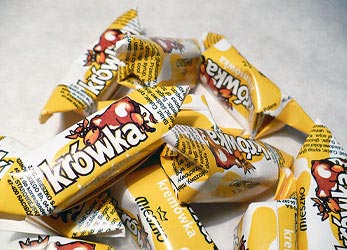
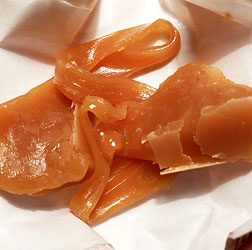
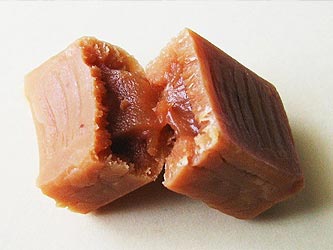
Krowki, what can be translated into English as little cows, are Polish milk candies. Krowki are made of a peculiar mass, something similar to toffee. These Polish sweets are soft, unusually ductile and gluing palate and teeth together. That is where an unofficial name of candies comes from – mordoklejki what means puss gluing. An interesting and characteristic feature is a fact that with a passage of time krowki harden from the outside. Fresh krowki are malleable in their entire volume (see photo below). With the passing of time, however, they start to crumble, as a result of sugar crystallization.
Krowki were invented in the first half of the 20th century by Polish confectioner Feliks Pomorski. the candies were wrapped up in pieces of paper with a picture of a cow, which later rendered the name 'little cows' popular, and used even nowadayson account of this traditional packaging.
Photos by TastingPoland (1, 2) and Wikipedia (3).
" Krowki (plural; Krowka singular), literally 'little cows', are Polish fudge, semi-soft milk toffee candies. It is one of the most common Polish confectioneries, sold worldwide" — Wikipedia
Sliwki w czekoladzie • Chocolate-coated plums
in Polish: śliwka ♫ w czekoladzie, śliwki (plural) w czekoladzie
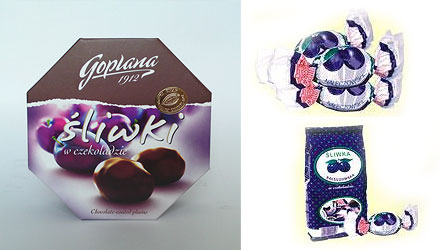
Chocolate-covered plums are traditional Polish candies, produced for many, many years. An entire plum covered with some kind of cocoa mass and covered with chocolate icing makes up for the heart of the candy. Yum-yum! Polish chocolate-coated plums in a decorative packaging make a great gift.
Both Photo come from websites of those producers.
Ptasie mleczko • Bird's milk
in Polish: as above
Ptasie mleczko, which means 'bird's milk' is sweet light milk mousse, with a very delicate taste. This Polish sweet is covered with chocolate icing. In general the mousse has a vanilla, fruit or chocolate flavor. Ptasie mleczko is recognized as one of traditional Polish desserts and sweets. Bird's milk has been produced for many decades by E.Wedel's company located in Warsaw. Nowadays, other companies as well try to make ptasie mleczko for the Polish market, e.g. Milka / Kraft Foods sells this product under a name 'Alpine milk' (Alpejskie Mleczko).
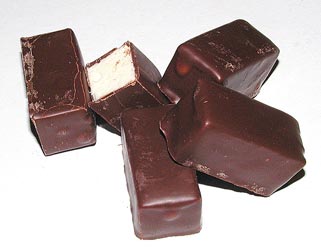
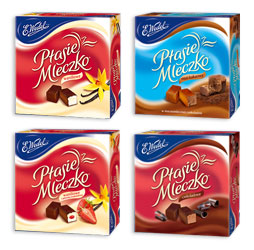
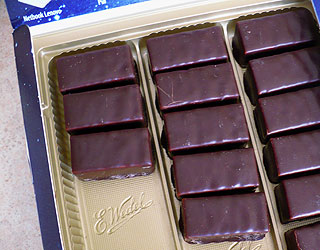
"Ptasie mleczko, which translates as 'bird's milk' is a soft chocolate-covered candy filled with soft meringue (or milk soufflé). In Poland, E. Wedel Company first developed its ptasie mleczko in the 1930s." — Wikipedia
Panska skorka • Lordly skin
in Polish: pańska skórka
Panska skorka (literal translation: 'a lordly skin') is a traditional Polish white-pink home-made candy, wrapped up in a piece of paper and sold mainly in Warsaw during the All Saints' Day and church fetes. In Cracow miodek turecki ('Turkish honey') fulfills a similar role. The name is given bythe glassy surface of the candy. Panska skorka is related to Turkish Delight (in Poland known as rachatlukum).
Kukulki • Cuckoos
in Polish: kukułki
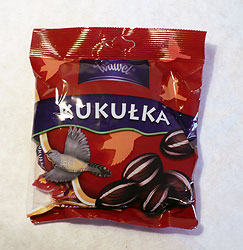
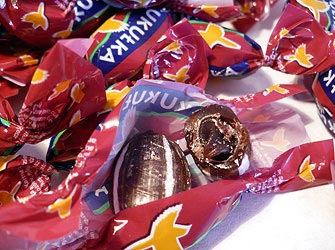
Kukulki are traditional Polish sweets produced for years. Cuckoos have a hard, glazed coating with a great alcoholic filling. Kukulki contain 1.5% of spirit, so you have to be careful. It is also interesting that there is a Polish recipe for a delicious liqueur made from these sweets.
Cukierki czekoladowe or praliny • Chocolates
in Polish: as above
If you go to Poland and want to taste local chocolates, I whole-heartedly can recommend you some. Let me start from the most traditionally Polish ones. Kasztanki (those in an orange foil, see the photo below) are large chocolates with a very specific cocoa/nut filling, covered with dessert chocolate. You can find many little crunchy specks inside this Polish chocolate (as I suppose, some kind of a hard wafer). Malaga (wrapped in a silver foil) are one of my favorite delicious chocolates with a semi-liquid filling containing plum slices. It is hard to tell you more about the taste of Malaga chocolates, since I have never eaten anything like them. Equally traditional, though definitely more down-to-earth and ordinary, there are Michalki chocolates with a cocoa filling.
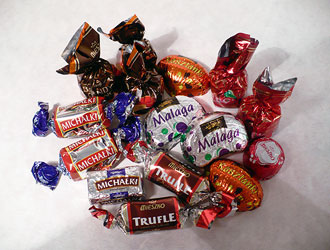
Last but not least we have got Trufle and a collection of chocolates by Mieszko company worth mentioning. Trufle are another delicious candies with a peculiar alcoholic filling. These aren't traditional Polish delicacies, but perfect tastes make me to believe that these Polish chocolates deserve the most sincere recommendation. The chocolates wrapped in a red piece of paper (by Mieszko) are morello cherries in a liqueur, whereas the ones in brown paper are stuffed with a filling made of brandy and orange.
Of course the choice I've made above is subjective, but I go for the wager that you also would like a taste of the majority of these chocolates.
Prince Polo
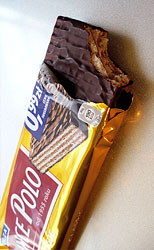
Prince Polo is a simple but very tasty Polish chocolate wafer. It is sold in Czech Republic, Slovakia, Hungary, Lithuania, Latvia and Ukraine under a name Siesta. In Iceland it is well-known as Prins Póló. For many years, in Communist Poland, Prince Polo had been a bestselling chocolate wafer and its popularity did not diminish even nowadays. Prince Polo was produced for the first time in 1955, in early years of the Polish People's Republic, by a company called Olza SA. Prince Polo is easy to recognize thanks to its characteristic golden wrapping.
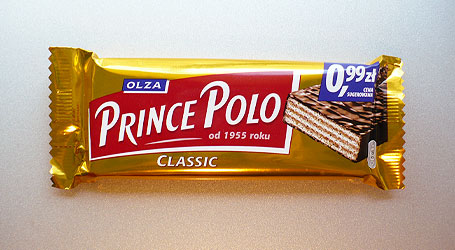
"Prince Polo is a Polish chocolate bar. It is sold in the Czech Republic, Slovakia, Hungary, Lithuania and Ukraine under the name Siesta, and is also sold in Iceland, where it's known as 'Prins Póló'. Prince Polo was introduced in 1955, during the early years of the Polish People's Republic. It was for many years one of the few chocolate bars available in the country. It has long been Poland's top-selling candy brand." — Wikipedia
Sezamki • Sesame snaps
in Polish: as above
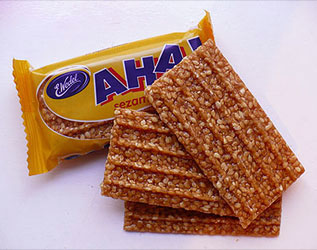
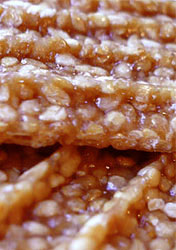
Sesame snaps are bars made of sesame mixed with a tough caramel which are well-known (not only in Poland). A very tasty, simple and fast snack. Produced by E. Wedel for several dozen years.
Galaretka • Polish jelly
in Polish: as above
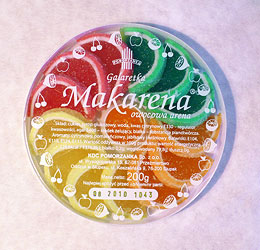
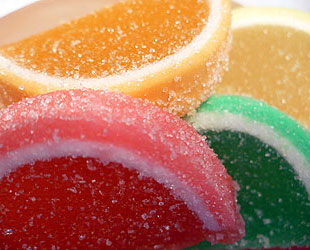
Glaretka (or galaretki), which simply means jelly, is another relic of the Communism. A simple product made of colorful fruit jellies sprinkled with sugar. Galaretka is semi-crumbly, in contrast with well-known jellies produced by Haribo. It is not a refined product, but quite traditionally Polish. Today however, thepopularity of galaretka is definitely lower than 20-30 years ago, because of wide access to a huge diversity of other Polish sweets. If you like jelly, you will love galaretka.
Kogel mogel aka Kogiel mogiel
in Polish: as above
Kogiel-mogiel or kogel-mogel is a simple dessert prepared from raw yolks and sugar. It turned up in Poland in the 17th century, and is probably Jewish in origin. Kogiel-mogiel was particularly popular under Communism, when sweets were not readily available. This type of dessert is also known in Germany, Russia, and Israel.
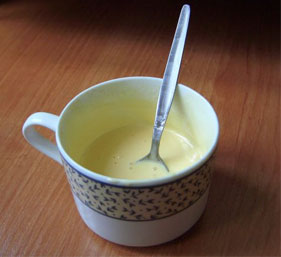
"An egg-based homemade dessert popular in Eastern Europe made from egg yolks, sugar, and flavourings such as chocolate or vodka. In its classic form it is served slightly chilled or at room temperature. Served warm, it is considered a home remedy for sore throats." — Wikipedia